Government of Oregon contract. Analysis and Decision Support System
The Port of Portland Bid Analysis Project was designed to improve the efficiency and transparency of evaluating construction contractor proposals submitted for airport infrastructure projects. Construction procurement often requires reviewing hundreds of pages of bid documents, engineering estimates, contractor qualifications, pricing schedules, and supporting documentation. Manually comparing this information is time-consuming, increases the likelihood of human error, and makes it difficult to identify trends across multiple projects. The objective of this project was to demonstrate how data analytics, Python automation, machine learning, and business intelligence tools could transform unstructured procurement documents into a searchable, data-driven decision support system.
The first phase of the project focused on data acquisition and preparation. Bid packages and engineering documents were collected in PDF format from publicly available government procurement records. Because the information existed primarily as unstructured text, Python was used to automate the extraction process and convert the documents into structured datasets. Multiple data cleaning techniques were applied, including text normalization, removal of duplicate records, handling of missing values, formatting inconsistencies, and standardization of contractor and project information. The cleaned data was exported into CSV files to support additional analysis and visualization.
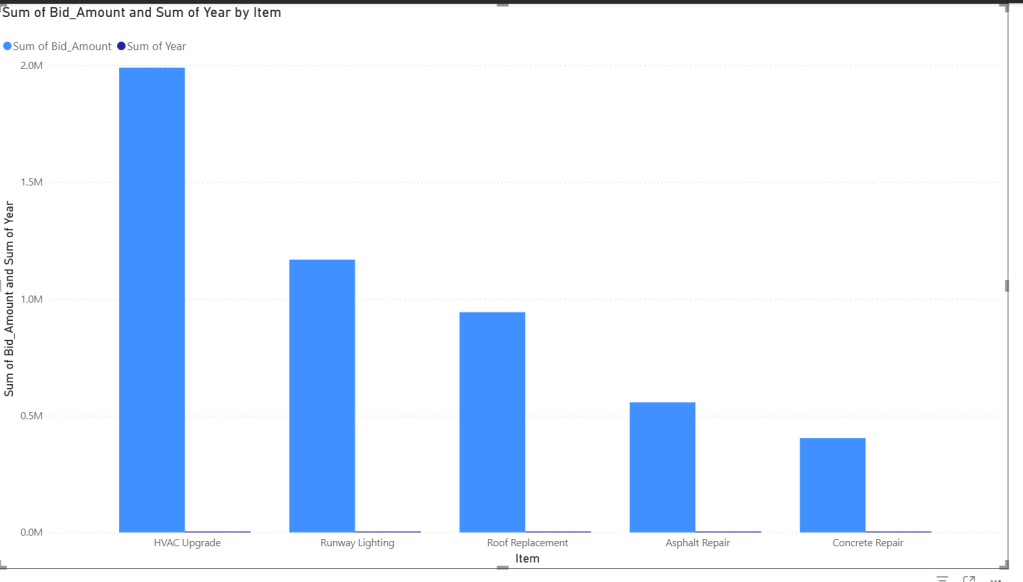
Once the data was prepared, it was loaded into Power BI to create interactive dashboards that summarized contractor activity, engineer estimates, submitted bid amounts, project categories, and procurement trends. These dashboards allowed users to filter projects by contractor, project type, bid value, and contract status, significantly reducing the time required to locate relevant information. Rather than searching through hundreds of pages of documentation, decision makers could quickly identify comparable projects and evaluate historical contractor performance through dynamic visualizations.
To further enhance the analysis, machine learning techniques were incorporated using Python. K-Means clustering was applied to compare contractor bid prices against engineer estimates, allowing similar projects to be grouped according to pricing behavior. This approach helped identify projects with consistent bidding patterns as well as contracts that deviated significantly from expected costs. While the available dataset contained a relatively small number of usable records after preprocessing, the clustering analysis successfully demonstrated how unsupervised learning can reveal hidden relationships within procurement data and support future cost estimation efforts.
An additional component of the project involved building a searchable knowledge base for procurement documents. Text extracted from thousands of document sections was converted into vector embeddings and stored within a ChromaDB database. This allowed users to search large collections of bid documents using natural language rather than manually opening individual files. By combining document embeddings with semantic search techniques, the system provided rapid access to relevant contract information, creating the foundation for an AI-assisted procurement assistant capable of answering questions about historical projects, contractor qualifications, and bid requirements.
The project also included a financial evaluation to estimate the organizational impact of implementing an automated bid analysis process. Based on estimated labor savings, improved document retrieval, and increased analytical efficiency, the proposed solution generated an estimated implementation cost of approximately $20,000 while producing projected organizational benefits exceeding $79,000. This resulted in a net estimated benefit of approximately $59,300 and an estimated return on investment (ROI) of nearly four times the initial implementation cost. Although these values represent a business case projection rather than measured operational results, they demonstrate the potential financial value of integrating analytics and automation into government procurement workflows.
This project demonstrates a broad range of technical and analytical competencies including Python programming, data extraction and transformation (ETL), data cleaning, machine learning, Power BI dashboard development, data visualization, business intelligence, financial analysis, semantic document search, and decision support system design. More importantly, it illustrates the ability to transform complex, unstructured information into meaningful business insights that improve operational efficiency and support strategic decision-making. The techniques developed during this project are transferable to many industries that rely on document-intensive processes, including construction management, supply chain operations, government contracting, financial services, and enterprise business analytics.